
-
Pope Leo's Black family roots inspired journalist Susan Saulny to research her Creole great-uncle who moved to Chicago, became white and didn't return. She describes her journey to reunite her family.
-
 Carl TimponeKimberlé Williams Crenshaw helped name two contested ideas in U.S. politics — intersectionality and critical race theory. Her memoir chronicles the personal and legal framework for her thinking.


-
 A New York Times investigation has revealed allegations that the late renowned labor leader abused girls and raped Dolores Huerta, his longtime organizing partner.
 -
 In her new book, Darkology, historian Rhae Lynn Barnes writes about how blackface and minstrel shows became one of the most popular forms of entertainment in 19th- and 20th-century America.
 -
 Memorial services for the Rev. Jesse Jackson Sr. to honor his long civil rights legacy begin in Chicago. Events will also take place in Washington, D.C., and South Carolina, where he was born and began his activism.
 -
 As a series of memorial services begin to pay respects to Jackson, a new generation of leaders works to preserve hard-fought civil rights gains.
 -
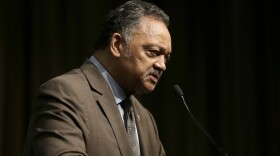 Rev. Jesse Jackson Sr. was a beloved alumnus of North Carolina A&T State University. On Tuesday, Aggie students paused to share their thoughts on his lasting legacy.
 -
NPR's Ayesha Rascoe talks to Heidi Beirich, co-founder of the Global Project Against Hate and Extremism about the prevalence of racism in modern political discourse.
-
 Nancy Guthrie is among the thousands of people who go missing in the U.S. each year. But experts describe her case as "strange," with many unique details, from her age to her celebrity daughter.
 -
 It explores the lives of free and enslaved African Americans in Guilford and Rockingham counties from the 1700s to emancipation.
 -
 Dorothy Roberts' parents, a white anthropologist and a Black woman from Jamaica, spent years interviewing interracial couples in Chicago. Her memoir draws from their records.
 -
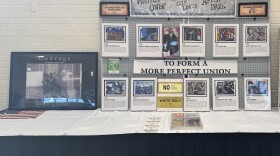 “To Form a More Perfect Union” features a collection of African American stamps issued by the U.S. Postal Service to commemorate historic civil rights milestones.


